



Introduction
Welding, a cornerstone of manufacturing and construction industries, continues to evolve with advancements in technology. Hamilton, renowned for its industrial prowess, stands at the forefront of adopting and innovating welding technologies. This article delves into the current state of welding technology in Hamilton and forecasts its future trajectory.
- Introduction
- Current Landscape of Welding Technology in Hamilton
- Innovations Driving the Future of Welding
- Economic and Environmental Implications
- Challenges and Considerations
- Frequently Asked Questions
- 1. What are the emerging trends in welding technology expected to impact Hamilton?
- 2. How will robotic welding systems influence the job market for welders in Hamilton?
- 3. What role will augmented reality (AR) play in the future of welding training in Hamilton?
- 4. How significant is the integration of Internet of Things (IoT) devices in welding equipment for Hamilton’s industrial landscape?
- 5. What are the environmental implications of advancements in welding technology for Hamilton?
- Conclusion
- Frequently Asked Questions
Current Landscape of Welding Technology in Hamilton
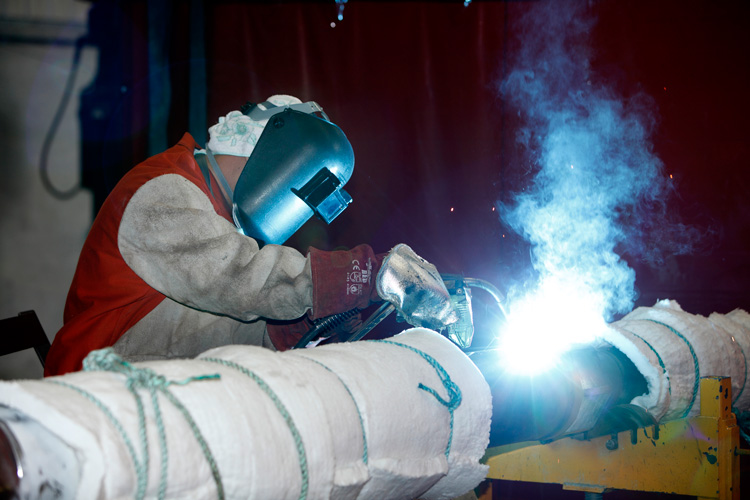
Hamilton’s industrial landscape is dotted with enterprises utilizing diverse welding techniques, from traditional arc welding to advanced robotic welding systems. Traditional methods like shielded metal arc welding (SMAW) and gas metal arc welding (GMAW) persist but are increasingly complemented by automated processes for efficiency and precision. Robotic welding arms dominate production floors, enhancing productivity while maintaining high-quality standards.
Moreover, the introduction of augmented reality (AR) and virtual reality (VR) in training programs has revolutionized skills development. Welders in Hamilton now undergo immersive simulations that replicate real-world welding scenarios, thereby reducing training time and improving safety.
Innovations Driving the Future of Welding
Advanced Materials and Alloys
As industries in Hamilton demand stronger, lighter, and more corrosion-resistant materials, welding techniques are evolving to accommodate advanced alloys like aluminum, titanium, and high-strength steel. Processes such as friction stir welding (FSW) and laser welding are gaining traction due to their ability to weld dissimilar materials effectively.
Robotics and Automation
Robotic welding systems are poised to become even more integral to Hamilton’s manufacturing landscape. These systems offer consistent weld quality, operate 24/7, and can adapt to complex geometries with minimal human intervention. Collaborative robots (cobots) are also emerging, working alongside human welders to handle repetitive tasks and improve overall efficiency.
Internet of Things (IoT) Integration
The IoT is revolutionizing welding through real-time monitoring and data analytics. Sensors embedded in welding Hamilton equipment collect data on parameters such as temperature, voltage, and feed rate, allowing for predictive maintenance and process optimization. This data-driven approach minimizes downtime and reduces costs associated with equipment failure.
Additive Manufacturing (3D Printing)
While primarily associated with prototyping and small-scale production, 3D printing is making inroads into welding technology. Additive manufacturing processes like Direct Energy Deposition (DED) and Wire Arc Additive Manufacturing (WAAM) are being explored for creating large-scale metal components with complex geometries. These processes offer flexibility in design and material usage, opening new avenues for customized welding solutions in Hamilton.
Economic and Environmental Implications
The adoption of advanced welding technologies in Hamilton not only enhances productivity but also has significant economic and environmental implications. Increased automation reduces labor costs and improves manufacturing competitiveness. Furthermore, advancements in welding efficiency contribute to energy savings and material conservation, aligning with sustainable development goals.
Challenges and Considerations
Despite the promising future, challenges such as the skills gap in advanced welding Hamilton technologies and cybersecurity risks associated with IoT integration need addressing. Continuous investment in training programs and cybersecurity measures is crucial to realizing the full potential of welding innovations in Hamilton.
Frequently Asked Questions
1. What are the emerging trends in welding technology expected to impact Hamilton?
In Hamilton, welding technology is advancing rapidly. Key trends include the adoption of robotic welding systems, augmented reality (AR) for welder training, and the integration of Internet of Things (IoT) devices for real-time monitoring and predictive maintenance.
2. How will robotic welding systems influence the job market for welders in Hamilton?
Robotic welding systems are expected to increase efficiency and productivity in Hamilton’s manufacturing sector. While these systems can automate repetitive tasks, skilled welders will still be needed to program, monitor, and maintain these machines, potentially leading to higher demand for advanced welding skills.
3. What role will augmented reality (AR) play in the future of welding training in Hamilton?
AR is poised to revolutionize welding training by providing immersive simulations and real-time feedback to trainees. This technology allows welders to practice in virtual environments, improving their skills without using physical materials. Hamilton’s vocational schools and training centers are increasingly incorporating AR into their programs to better prepare welders for industry demands.
4. How significant is the integration of Internet of Things (IoT) devices in welding equipment for Hamilton’s industrial landscape?
IoT devices enable remote monitoring of welding parameters, equipment performance analytics, and predictive maintenance in Hamilton. This proactive approach minimizes downtime and enhances operational efficiency in welding processes. As IoT adoption grows, Hamilton’s manufacturers are likely to see reduced costs and improved quality control in their welding operations.
5. What are the environmental implications of advancements in welding technology for Hamilton?
Advancements such as laser welding and friction stir welding are gaining traction in Hamilton due to their eco-friendly benefits. These technologies produce less waste, consume less energy, and emit fewer pollutants compared to traditional welding methods. As environmental regulations tighten, these advancements are expected to play a crucial role in reducing Hamilton’s industrial carbon footprint.
Conclusion
Hamilton’s journey into the future of welding technology is marked by innovation, integration of advanced materials, and automation. As industries evolve, so too does the role of welding, adapting to meet the demands of modern manufacturing and construction. With ongoing advancements in robotics, IoT, and additive manufacturing, Hamilton is poised to remain a leader in welding technology, driving efficiency, sustainability, and economic growth in the years to come.